The best life is a God First life

Category: Accountability

The Crux of God’s Forgiveness is our Repentance

In my writing, I’ve been known to share the good, the bad, and the ugly of my life at times. I do this in hopes of encouraging others to seek their answers where I found mine, in the knowledge of Scripture.  This knowledge helps us realize that if we follow Jesus according to His will, not ours, we will come to experience peace far beyond our own understanding. Our lives have many Satan-crafted pitfalls designed to inch us away from our Creator and towards a valley of eternal death.

As a young man, I was baptized into Christ for the forgiveness of my sins and lived faithfully for many years. Faithfulness does not mean being without sin; rather, it means making every effort to pursue righteousness by following Jesus’ teachings and keeping His commandments. Sometimes we fail; however, if we know Scripture, it helps us recognize our failures, return to our creator, repent of our sins, and ask for forgiveness. Since we know from scripture that baptized believers are in Christ, God will forgive us when we repent.

The crux of God’s forgiveness is our repentance.

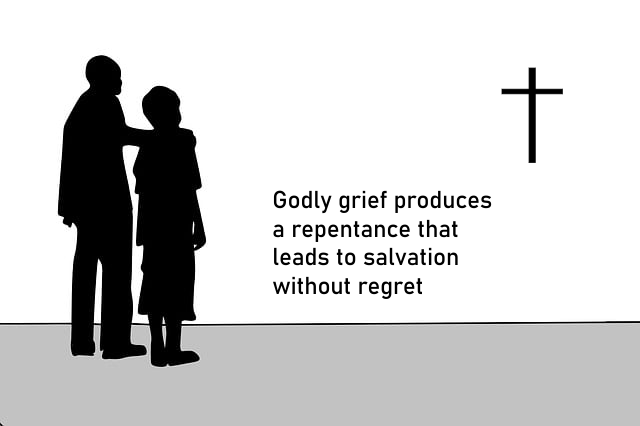
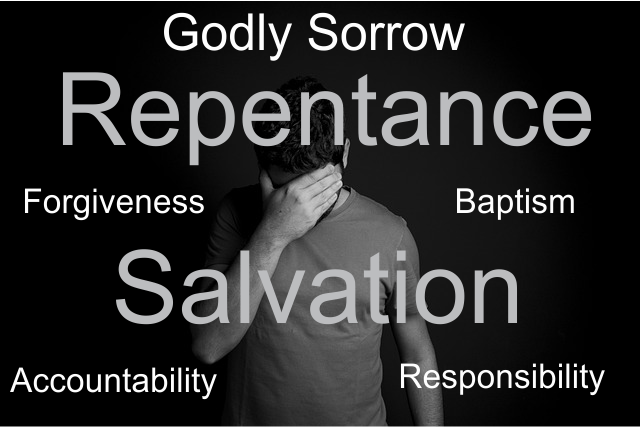
To truly repent of sin is to turn away from those sins as we experience Godly Sorrow, dedicating ourselves from that point to the correction of our lives using the Word of God as our foundation. Scripture defines Godly Sorrow this way: “For Godly grief produces a repentance that leads to salvation without regret, whereas worldly grief produces death.” (2 Corinthians 7:10).

With Godly grief, we repent of sinful ways; this means we change direction and stop indulging in those temptations that go against God’s Holy Word. Scripture lets us know that baptized believers who choose to indulge and continue doing what we know to be wrong are crucifying Christ once again.

 “For if, after they have escaped the defilements of the world by the knowledge of the Lord and Savior Jesus Christ, they are again entangled in them and are overcome, the last state has become worse for them than the first.  For it would be better for them not to have known the way of righteousness, than having known it, to turn away from the holy commandment handed on to them.” 2 Peter 2:20-21

also see: Hebrews 6:4-6, James 5:19-20, Hebrews 10:26-27

Although a baptized believer, I ended up spending 20 years with my soul in a lost condition as I had succumbed to a series of temptations and pitfalls designed by Satan.

I thought my faith was strong, but my decisions after a failed marriage proved my knowledge was weak, and my commitment shaken.  I allowed myself, inch by inch, to pursue worldly desires over following Jesus. These infractions stacked and built to the point that during those 20 years, I feared correction could jeopardize my adopted lifestyle and possibly put my relationship at risk.

I was, however, acutely aware that my choices had me living in sin. This bothered me. Satan had successfully painted me into a corner, forcing me to choose between following Jesus according to His will or losing my soul.

Indeed, as scripture states, I was crucifying Christ to myself. Years I can’t get back, a bad example to family and friends that can’t be unset, where soul-risking damage was done. Today, I draw on those years as fuel for my efforts to never give up on encouraging others to grow in Christ, and I often pray that, if they won’t listen to me, God will put people in their lives they might.  I cannot imagine ever allowing Satan to turn me away from God again.

I pray that if you’re reading this and reflecting on your own life, you find yourself right with God; but if not, I pray you will experience godly grief that produces repentance that leads to salvation without regret, rather than worldly grief that produces death.

God First, forever and ever, Amen!

If you’re not yet in Christ as a baptized believer:

  • God’s Grace: Ephesians 2:8, Romans 3:24, Titus 2:11, Acts 15:11
  • Hearing the Gospel:– Romans 10:17, John 8:32
  • Belief/Faith: – Hebrews 11:1, John 8:24, Romans 10:17, Acts 3:19
  • Repentance of sin: – 2 Cor. 7:9-10, Luke 13:3-5, Acts 17:30
  • Confess Christ: – Romans 10:9-10, Matthew 10:32-33, Luke 12:8-9
  • Baptism by immersion for forgiveness of sin: – Matthew 16:15-16, 1 Peter 3:21, Acts 2:38, Mark 16:16, John 3:5, Matthew 28:18-20, Ephesians 4:5, Romans 6:3-4, Colossians 2:12, Acts 8:36-39, Mark 1:9-10, John 3:23

Being wise in our own eyes

Several years ago, on social media, someone posted this question: What came first, Sin or Law? Without any research, I replied with my explanation as if I knew what I was talking about. This person then pointed to Romans 5:13, which proved my thoughts wrong.

This embarrassed me; however, this embarrassment was one of the best things that could’ve happened to me. It helped me realize I had leaned on my own understanding rather than on my actual study of God’s Word.

It was my fault, I was wrong! I had attempted to be wise in my own eyes.

Since then, I have studied and researched scripture diligently so that I can give a scriptural reason for the hope that is in me and help others understand what God’s Word actually says.

I am especially thankful for this “One post,” which inspired me to study the most essential book in life with all seriousness. (God’s Word) I will always be thankful for the person who posted that question.

Scripture says;

“Trust in the Lord with all your heart, and do not lean on your own understanding. In all your ways acknowledge him, and he will make straight your paths.” ‭‭Proverbs‬ ‭3‬:‭5‬-‭6‬ ‭ESV‬‬

None of this means I won’t miss or misconstrue something, but the more we know God’s Word, the better our ability to discern it. And, since we are all responsible for our own salvation, I will always encourage myself and others to self-study; it’s how we gain better discernment of God’s Word. Our souls depend on it.

  • 2 Timothy 2:15
  • 1 Peter 3:15
  • Romans 8:28

God First!

Does God love some more than others?

As I contemplated this question, I concluded God loves the “response” of some more than others.

Like parents and children, one child might do as directed most of the time while the other doesn’t. Parents do not love the obedient child more than the other; however, they do love the obedient child’s response more than the disobedient response. The obedient response shows a desire to please the parents by doing as told. (its a response of love)

In Scripture, we learn that Jesus died for everyone in the world and that God shows no partiality. Scripture also tells us to love God with all our heart, soul, mind, and strength, and Jesus said if we love Him, we will keep His commandments.

David was considered a man after God’s Own Heart; why? God tells us: “He will do my will.” Saul, on the other hand, lost his kingdom for doing “his own” will, not God’s.

King David made many huge mistakes and, unlike Christ, was far from perfect, yet David constantly turned to and relied on God; David pursued righteousness. (Respecting God and doing His will mattered to David)

We all have the same choice!

We can choose to follow God’s will by study, learning, and following the commands and examples of Scripture, to the best of our ability, or we can choose to follow our feelings, our ideas, or those adopted from others, then woefully expecting that if we are wrong, God will be ok with us because we had good intent. However, that is not what Scripture tells us, and when we do this, we set examples that mislead others from following Christ according to the directions God gave us in His Holy Word.

When we follow God according to His will, we spend our lives pursuing righteousness. In James chapter 5, we find the effective prayer of a righteous man can accomplish much. To have our prayers accomplish much, pursuing righteousness should be our goal so that our hearts may be where King David’s was in devotion to God.

John 3:16 tells us: “For God so loved the world, that He gave His only Son, that whoever believes in Him should not perish but have eternal life.”

“So Peter opened his mouth and said: “Truly I understand that God shows no partiality, but in every nation, anyone who fears Him and does what is right is acceptable to Him.” Act 10:34-35

“And when he had removed him, he raised up David to be their king, of whom He testified and said, ‘I have found in David the son of Jesse a man after My heart, who will do all My will.’” Acts 13:22 ESV

“But now your kingdom shall not continue. The LORD has sought out a man after His own heart, and the LORD has commanded him to be prince over His people because you have not kept what the LORD commanded you.” Samuel 13:14

“Therefore, confess your sins to one another, and pray for one another so that you may be healed. The effective prayer of a righteous man can accomplish much.” James 5:16 NASB

God First!

A story Change

I caught him stealing; he had broken into our home. I was upset and nervous as I held the gun. Then, he began begging me not to call the police, let him go, insisting he would not come back. We started talking, and he told me the harsh circumstances of his life that led him to this moment of crime. I began telling him about Christ and the forgiveness of sin available to him through Christ, how, if he would repent of his sins, change the direction of his life, and put on Christ in baptism, he could have forgiveness and eternal life in heaven, as well as a better life here on earth.

We sat at the table, opened a Bible, and studied for several hours. He came to understand God’s gift of grace, the Sacrifice of Jesus that offers us eternal life if we will pick up the cross and follow Jesus according to His will, not ours. We also discussed how following Christ does not relieve anyone of accountability for their actions.

During our study, this criminal came to believe in Christ, experienced godly sorrow, and wanted to begin making things right, so he reached into his pocket and handed me the jewelry he had taken. By doing so, he began taking responsibility for his actions and attempted to make things right. He informed me he wanted to be baptized. After hearing the word of God, he repented, confessed Jesus as the Son of God, and we took him to the pool and baptized him for the forgiveness of his sins, immersing him in water in accordance with Scripture.

After baptism, he understood that his decision did not absolve him of the consequences of his actions. His heart had changed; he now wanted to take responsibility and accept accountability, and I applauded his decision. We then called law enforcement.

Because of his sorrow and request that I forgive him; I did so and chose not to press charges. His decision to make things right was admirable, but it would be costly for him, since he had also broken into other homes and entered our country illegally. He knew, in his heart, that he needed also to correct these wrongdoings.

At least now, when he is deported to his country, he takes with him a greater purpose: to spread what he has learned about the message of Christ with others. Maybe he will return to America legally someday. I gave him my study Bible and contact information. I look forward to hearing from him about his efforts to share Christ.

While this story is fictitious, it’s also possible.

Following Christ does not negate accepting responsibility and accountability for one’s actions; it enhances it. If we genuinely love Jesus and righteousness, we will want to do what’s right, even if it means exchanging our loss of earthly freedom for eternal life in heaven. (Matthew 16:24-26, John 14:15, Romans 6:1-14, Mark 16:15, Philemon 1)

Scripture’s definition of Godly Sorrow: (2 Corinthians 7:9-13)

God’s Grace: Ephesians 2:8, Romans 3:24, Titus 2:11, Acts 15:11

Hearing the Gospel:– Romans 10:17, John 8:32

Belief/Faith: – Hebrews 11:1, John 8:24, Romans 10:17, Acts 3:19

Repentance of sin: – 2 Cor. 7:9-10, Luke 13:3-5, Acts 17:30

Confess Christ: – Romans 10:9-10, Matthew 10:32-33, Luke 12:8-9

Baptism by immersion for forgiveness of sin: – Matthew 16:15-16, 1 Peter 3:21, Acts 2:38, Mark 16:16, John 3:5, Matthew 28:18-20, Ephesians 4:5, Romans 6:3-4, Colossians 2:12, Acts 8:36-39, Mark 1:9-10, John 3:23
God First!

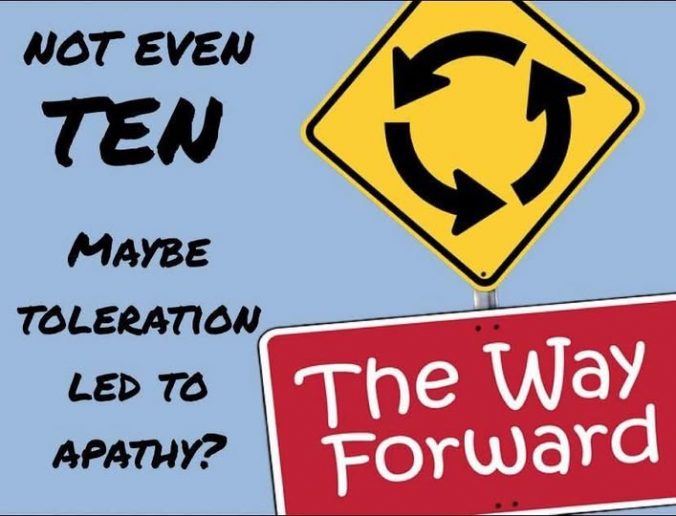
NOT EVEN 10, Maybe toleration led to apathy

Not even 10 Righteous were found in Sodom and Gomorrah.

“Then he said, “Oh may the Lord not be angry, and I shall speak only this once; suppose ten are found there?” And He said, “I will not destroy it on account of the ten.”(Genesis‬ ‭18:32‬)

I wonder how many righteous originally built Sodom and Gomorrah; what happened?

Maybe, in the name of love, they began tolerating sinful actions, leading them to exclude and distance themselves from God, calling good evil and evil good.

Maybe as tolerance grew in popularity, fear of standing with God equated to fear of ridicule and fear of physical harm. Maybe, over time, the righteous became silent, and when the righteous are silent, so is their example.

Anything familiar here?

To tolerate everything is to stand for nothing. We cannot spread the truth with silence.

  • James 4:8 (close or away)
  • Matthew 12:30 (with or against)
  • Revelation 3:15–17 (Luke warm)
  • Matthew 24:10-14 (warning)

God First!

I was risking my soul; I could have lost it!

In my mind, I began generating a list of people who have impacted my life. The list quickly became too long to count. Most were encouraging, loving, compassionate, and caring, while others were hateful, mean, threatening, and scary. Some vulgar, while others careful and thoughtful.

Some influencers were people users; some rejected friendships, while others worked to create them. Some were dishonest, greedy, and liars, with some constantly seeking their next high on drugs or alcohol. Thankfully, a few lived their lives striving to be like Christ, pursuing righteousness and working as disciples of Christ, believers in God, and students of Scripture. Simply put, our influencers throughout life contribute to who we become.

For many years, selfish desires guided me toward negative influences more than positive ones. I tried to straddle right and wrong, which led to more bad choices than good ones.

I didn’t want to think about my soul’s condition, yet I knew enough scripture to understand that unless I changed the direction of my life, Heaven WAS NOT my forever home.

I was risking my soul; I could have lost it!

I avoided, dismissed, ignored, and distanced myself from any conversation that might prompt me to think about the seriousness of my soul’s condition.

I had convinced myself I was a good person, and though I knew my lifestyle was against the teachings of scripture. I actually entertained the idea that I could plead ignorance before God; Now, that was sheer foolishness, and deep down, I knew it.

Twenty-two-plus years ago, circumstances beyond my control prompted me to rethink my path. First, small changes led to more noticeable ones, and then, in more recent years, many fundamental changes occurred.

The “old person” of my past is now gone, replaced with faith and trust in God. I no longer attempt to straddle fences and take comfort in knowing that my forever home will be in the mansions Jesus has prepared.

Jesus wants us all to hear and respond to the love of His message. God’s offer of forgiveness. He wants us all to believe and repent (change direction), confess Christ as His Son, be baptized into Christ for the forgiveness of our sins, and then walk through life as a “New person”, knowing our past sins are forgiven and forgotten by God.

Studying God’s word these last few years has significantly improved my understanding, as it can for anyone.

The question I now contemplate is: How can I help someone who is where I was 22-plus years ago?

How can I help others realize the need to make a change today?

How can I help others realize that by gambling their soul, “their influence” contributes to loved ones gambling with theirs?

How can I do my part to help others realize the seriousness of our choices?

Changing direction is easy when you replace your old desires with new ones and lean on the encouragement of your brothers and sisters in Christ.

Why gamble with eternity?

Why wait?

God First!

After Death

Upon entering paradise, what will our first thoughts be? Will we immediately want to return to our family? Will we first think,” But I’m not finished,” or will we immediately understand; we have no more worries; God is in control?

In the illustrated story of the rich man and Lazarus, the rich man did not go to paradise; nope, he went directly to torment.

On the torment side of Hades, he lifted up his eyes and saw Abraham with Lazarus by his side. In his first thoughts, he asked Abraham to send Lazarus to cool his tongue with water, for the flames anguished him.

Abraham pointed out the large fixed chasm between them, which cannot be crossed in either direction, and how he had received good things on earth but Lazarus bad things.

Simply put: the rich man’s selfish life had earned him a one-way ticket to his eternal home in torment.

On the other hand, Lazarus’s suffering on Earth was over; he was no longer in pain from sores or hunger. Lazarus would now be comforted forever.

The rich man’s next thoughts were for his family; he wanted to send Lazarus or someone from the dead to warn his brothers of his demise. But alas, Abraham said: if they did not believe Moses and the Prophets, they would not be convinced if someone should rise from the dead.

I don’t know the answer to my initial questions; I suspect I would quickly understand; my opportunity to help others on Earth is over. Maybe, my example or some of my words will carry on briefly, but as always, God is in control!

You see, today, in addition to Moses and the prophets, we have the completed Word of God; we have the New Covenant of God through Christ and are told exactly how to follow God’s Will according to God’s Will.

Scripture tells us: “All Scripture is breathed out by God and profitable for teaching, for reproof, for correction, and for training in righteousness” (2 Timothy‬ ‭3‬:‭16‬ ‭ESV‬‬)

Twisting God’s Words has happened since the Lord’s Church began; however, the Truth is readily available to those who will take the time to study God’s Word and shew themselves approved.

We will each be held accountable for our salvation, and eternity is a long time to wish we had made better choices.

It is my prayer that all will prioritize the understanding of God’s Word beyond what others have told us. Let God’s Word speak and listen.

God First!

Luke 16:19-31 (Rich Man and Lazarus)

Galatians 1:6-8 (twisting truth)

Philippians 2:12 (work out our own salvation)

Romans 1:16 (Salvation for everyone)

2 Timothy 2:15 (Study)

“The Lord has established His throne in the heavens, and His kingdom rules over all. Bless the Lord, O you His angels, you mighty ones who do His word, obeying the voice of His word! Bless the Lord, all His hosts, His ministers, who do His will! Bless the Lord, all His works, in all places of His dominion. Bless the Lord, O my soul!” Psalm 103:19-22

The Power is in the Gospel

Preachers and teachers are needed to share the gospel. But, be cautious; don’t put your faith in what you are told or who shared it. Ultimately, we are each responsible for our own salvation.

When we each stand before judgment, it won’t matter what someone tells us. We have God’s word at our fingertips. We must each study for ourselves so that we may learn and be able to discern the truth found in God’s Word.

“For God is my witness, how I long for you all with the affection of Christ Jesus. And this I pray, that your love may abound still more and more in real knowledge and all discernment, so that you may approve the things that are excellent, in order to be sincere and blameless until the day of Christ; having been filled with the fruit of righteousness which comes through Jesus Christ, to the glory and praise of God.” Philippians 1:8-11 (NASB)

“Study to shew thyself approved unto God, a workman that needeth not to be ashamed, rightly dividing the word of truth.” 2 Timothy 2:15 (KJV)

“For I am not ashamed of the gospel of Christ, for it is the power of God to salvation for everyone who believes, for the Jew first and also for the Greek.” Romans 1:16 (NKJV)

“I am astonished that you are so quickly deserting Him who called you in the grace of Christ and are turning to a different gospel— not that there is another one, but there are some who trouble you and want to distort the gospel of Christ. But even if we or an angel from heaven should preach to you a gospel contrary to the one we preached to you, let him be accursed.” Galatians 1:6-8 (ESV)

“Therefore, my beloved, as you have always obeyed, so now, not only as in my presence but much more in my absence, work out your own salvation with fear and trembling,” Philippians 2:12 (ESV)

God First!

Learning from self-evaluation

Self-evaluation is not about longing for our past but instead learning from it!

Some say: Always look forward, never look back! So, if by looking back, you find yourself longing for those past days and focusing so much on what you once did that it distracts you from being content and enjoying what you can still do at the moment, this is a valid point. In this respect, I struggle in tennis, falling prey to looking back and longing for the game I once played with its power and speed. But, in doing so, I steal from the moment and all it could be If I would just let it.

However, self-reflection and evaluation are different from looking back and getting stuck in the past. When we evaluate ourselves, we create opportunities to take pauses and learn from our experiences.

Self-reflection is essential, it does indeed stir up feelings of embarrassment, regret, and sadness, but it also stirs up levels of self-validation, self-approval, smiles, and laughter which can add to our contentment.

For example, looking back on one such moment was embarrassing and funny.

It was in the late 80s; There was once a popular sitcom cartoon on TV called “The Simpsons,” One of the characters was “Bartman,” which was the superhero alter ego of “Bart Simpson.” Although I was not a fan of the show, Virginia gave me a pair of Bartman shorts for my 30th Birthday.

A couple of weeks later, probably in November of 1989, we met our friends Jan and Wayne to play mixed doubles tennis. It was a chilly day, so we all started in warmups. As we played, the clothing trickled off till I was down to a T-shirt and my new shorts. A few points after removing my warmup pants, Jan paused the match to ask: Are you going to play in underwear? I quickly stated: No, these are Bartman shorts; Virginia got me for my Birthday.

Jan responds: with a flap in the middle?

I was instantly embarrassed as I realized they were “Bartman boxers,” not shorts. I had never worn boxers and assumed they were regular shorts. Needless to say, I immediately put my warmup pants back on, was relentlessly teased, and we laughed about it.

However, this moment of embarrassment etched a permanent place in my mind, and I learned at least three things from experience.

  • Assumptions are dangerous (Be more careful)
  • Details are important (Pay closer attention)
  • Relentless teasing ( It’s going to happen)

Without self-reflection and self-evaluation, we hinder self-accountability, which helps us make better choices on what to and not do in the future.

Scripturally, We find attributes of self-reflection and evaluation attributed to many of King Soloman’s writings. A man gifted with wisdom from God. And, in the Psalms of David, more on this later.

God First!

Does God love some more than others?

As I contemplated this question, I believe God loves the “response” of some more than others.

As with parents and children, one child might do as directed most of the time, while the other doesn’t. Parents do not love the obedient child more than the other; however, they do love the obedient child’s response more than the disobedient response. The obedient response shows a desire to please the parents by doing as told. (love)

In Scripture, we learn Jesus died for everyone in the world and that God shows no partiality. Scripture also tells us to love God with all our heart, soul, mind, and strength, and Jesus said if we love Him, we will keep His commandments.

David was considered a man after God’s Own Heart; why? God tells us: “He will do my will.” Saul, on the other hand, lost his kingdom for doing “his own” will, not God’s.

King David made many huge mistakes and was far from perfect, yet he constantly turned to and relied on God; David pursued righteousness. (doing God’s will mattered to David)

We all have the same choice!

Follow God’s will to the best of our ability by studying and following the commands and examples of Scripture or following our feelings, our ideas, or those of others.

When we follow God according to His will, we spend our lives pursuing righteousness. In James chapter 5, we find the effective prayer of a righteous man can accomplish much. To have our prayers accomplish much, pursuing righteousness should be our goal so that our hearts may be where King David’s was in devotion to God.

John 3:16 tells us: “For God so loved the world, that He gave His only Son, that whoever believes in Him should not perish but have eternal life.”

“So Peter opened his mouth and said: “Truly I understand that God shows no partiality, but in every nation, anyone who fears Him and does what is right is acceptable to Him.” Act 10:34-35

“And when he had removed him, he raised up David to be their king, of whom He testified and said, ‘I have found in David the son of Jesse a man after My heart, who will do all My will.Acts 13:22 ESV

“But now your kingdom shall not continue. The LORD has sought out a man after His own heart, and the LORD has commanded him to be prince over His people because you have not kept what the LORD commanded you.” Samuel 13:14

“Therefore, confess your sins to one another, and pray for one another so that you may be healed. The effective prayer of a righteous man can accomplish much.” James 5:16 NASB

God First!

© 2026 Advocate for Christ

Theme by Anders NorenUp ↑