The best life is a God First life

Tag: Forgiveness

Forgive the Repentant. Release the Rest to Jesus

If someone wrongs me and repents, I will forgive them. If they do not repent, I will not let bitterness rule my heart. I turn the matter over to Jesus, and as the song says, “let it go.” That does not mean the sin was small. It does not mean there are no consequences. It means I refuse to become the judge, the avenger, or the prisoner of someone else’s evil. If a person truly has a repentant heart, they will want to admit the wrong, accept the consequences of their actions, and resolve not to repeat them. Repentance is not a quick “I’m sorry” designed to escape accountability. Godly sorrow produces a change of mind that leads to a change of life. Even then, we must remember this: repentance and forgiveness do not erase consequences. Our actions still have consequences.

I recently heard the father of a young man who had been murdered speaking on the news. He spoke of forgiving his son’s killer and of his determination not to become bitter. He was right about bitterness. Bitterness does not heal a wound. It deepens it. It does not bring justice. It only adds a second injury to the first. God is our best example of how to handle forgiveness. To be forgiven by God, a person must change direction—repent—and seek His mercy on His terms. God does not pronounce the impenitent forgiven. The father in that news report said the murderer had not asked for forgiveness. That matters. We can refuse hatred without pretending God has already cleared an unrepentant sinner. Jesus made the same distinction when He taught His disciples how to treat a brother who sins:

“Pay attention to yourselves! If your brother sins, rebuke him, and if he repents, forgive him, and if he sins against you seven times in the day, and turns to you seven times, saying, ‘I repent,’ you must forgive him.” (Luke 17:3–4 ESV)

Notice the order: rebuke, repentance, then forgiveness. We are not told to ignore sin. We are not told to restore a relationship as if nothing happened when there is no repentance. We are told that when repentance comes—even repeatedly—we must forgive.That is how God treats us. Peter preached:

“And Peter said to them, ‘Repent and be baptized every one of you in the name of Jesus Christ for the forgiveness of your sins, and you will receive the gift of the Holy Spirit.’” (Acts 2:38 ESV)

And again:

“Repent therefore, and turn back, that your sins may be blotted out.” (Acts 3:19 ESV)

“If we confess our sins, he is faithful and just to forgive us our sins and to cleanse us from all unrighteousness.” (1 John 1:9 ESV)

“Whoever conceals his transgressions will not prosper, but he who confesses and forsakes them will obtain mercy.” (Proverbs 28:13 ESV)

True repentance is more than regret that one got caught. Scripture says:

“For godly grief produces a repentance that leads to salvation without regret, whereas worldly grief produces death.” (2 Corinthians 7:10 ESV)

John the Baptist put it even more plainly: “Bear fruit in keeping with repentance” (Matthew 3:8 ESV). A repentant person does not demand to keep the sin and receive the pardon too. Yet forgiveness is not the cancellation of every earthly result.

David was forgiven, but consequences still followed. Moses still did not enter Canaan. A forgiven thief may still owe restitution. A forgiven offender may still face prison, broken trust, lost relationships, or a lifetime of repair. God is merciful. He is also just. Pardon restores us to God; it does not rewrite every wrong we have done.

What, then, do we do when the offender never asks, never admits, never turns? We do not avenge ourselves. We do not feed bitterness. We do not let another person’s wickedness become the master of our soul.

Some people say, “I forgive them,” meaning, “I will not spend the rest of my life hating that person or letting what they did destroy my heart.” I understand that language. I call it turning the case over to Jesus, letting it go, and trusting God’s Word. If justice is not fully met on earth, it will be met before the throne of Christ. That is not the same as saying God has already forgiven an unrepentant person. It is saying we will not carry a burden God never assigned to us. Scripture commands us to put bitterness away:

“Let all bitterness and wrath and anger and clamor and slander be put away from you, along with all malice. Be kind to one another, tenderhearted, forgiving one another, as God in Christ forgave you.” (Ephesians 4:31–32 ESV)

“bearing with one another and, if one has a complaint against another, forgiving each other; as the Lord has forgiven you, so you also must forgive.” (Colossians 3:13 ESV)

And when we pray, Jesus says we must not clutch a grudge:

“And whenever you stand praying, forgive, if you have anything against anyone, so that your Father also who is in heaven may forgive you your trespasses.” (Mark 11:25 ESV)

“For if you forgive others their trespasses, your heavenly Father will also forgive you, but if you do not forgive others their trespasses, neither will your Father forgive your trespasses.” (Matthew 6:14–15 ESV)

Those verses do not teach cheap grace. They teach that a hard, vengeful, unforgiving spirit is incompatible with people who have themselves been shown mercy. God forgave us in Christ when we repented and obeyed the gospel. We are to have that same readiness: eager to forgive the repentant, unwilling to become bitter toward the unrepentant, and careful not to seize God’s seat as Judge. We can also pray for those who have wronged us, as Jesus and Stephen did:

“And Jesus said, ‘Father, forgive them, for they know not what they do.’” (Luke 23:34 ESV)

“And falling to his knees he cried out with a loud voice, ‘Lord, do not hold this sin against them.’” (Acts 7:60 ESV)

That prayer is not a declaration that the guilty are already cleared. It is an appeal that God would bring them to repentance and mercy. We can ask God not to let their sin destroy us, and we can ask Him to deal with them in truth. Meanwhile, we cast the weight on the Lord:

“casting all your anxieties on him, because he cares for you.” (1 Peter 5:7 ESV)

“Come to me, all who labor and are heavy laden, and I will give you rest. Take my yoke upon you, and learn from me, for I am gentle and lowly in heart, and you will find rest for your souls. For my yoke is easy, and my burden is light.” (Matthew 11:28–30 ESV)

And we leave justice with Him:

“Beloved, never avenge yourselves, but leave it to the wrath of God, for it is written, ‘Vengeance is mine, I will repay, says the Lord.’ To the contrary, ‘if your enemy is hungry, feed him; if he is thirsty, give him something to drink; for by so doing you will heap burning coals on his head.’ Do not be overcome by evil, but overcome evil with good.” (Romans 12:19–21 ESV)

“then the Lord knows how to rescue the godly from trials, and to keep the unrighteous under punishment until the day of judgment.” (2 Peter 2:9 ESV)

Jesus is Judge. We may never see the full accounting in this life. We do not need to. His Word is enough. So the Christian path is not bitterness, and it is not pretend innocence. It is this:

  • Rebuke sin when we must.
  • Forgive the one who truly repents—again and again.
  • Remember that forgiveness does not abolish consequences.
  • Refuse to hate the one who will not repent.
  • Pray for their repentance.
  • Place the case in the hands of Christ.
  • Overcome evil with good.

That is not weakness. That is faith. We love as Christ loved (John 13:34). We tell the truth about repentance. We trust the Judge who never misses a case.

Luke 17:3–4; Mark 11:25; Matthew 6:14–15; Matthew 18:21–35; Ephesians 4:31–32; Colossians 3:13; Acts 2:38; Acts 3:19; Acts 7:60; Luke 23:34; 1 John 1:9; Proverbs 28:13; 2 Corinthians 7:10; Matthew 3:8; Romans 12:17–21; Matthew 11:28–30; 1 Peter 5:7; 2 Peter 2:9; John 13:34; Hebrews 10:30

God First

The 20-year battle within – Part 2

We have now been together for 41 years, not long after we married on Feb 14th 2003, I told Virginia I wanted to go back to Church. This literally scared her, and she bawled. In her mind, my desire equated to me not thinking she was good enough. I assured her this was not the case. When I attended, I would arrive late for Worship and leave immediately. I thought that if people got to know too much about my life, they would try to change it, so I stayed very private at first. However, I remained consistent in my efforts to attend and learn, and eventually began attending all the Bible classes and evening services.
I was also a friend of Jimmy Miller, the minister at the time, whom I had known when I was a faithful teenager, so at that time, I mostly only talked with Jimmy.

Though we had corrected the marital part of our lives, there were other parts of my life that, in light of God’s Word, I thought conflicted with a selfless pursuit of following Christ; however, as my faith and understanding grew through study and application, so did my desire and efforts to address or replace those issues with better choices and habits as well.

Although few knew of my past at the time, I decided to repent publicly and move forward, asking the Church for forgiveness for those wayward years. As I attended, I would invite my wife, but only occasionally, as doing so constantly would irritate her. One Sunday morning, Virginia said yes and went with me. She then began attending with me sporadically, but over time, she came with me to every service and Bible study. Jimmy had some one-on-one Bible studies with us, and Virginia concluded she needed to be baptized into Christ.

My wife had been raised Catholic; she had adopted atheism from her previous husband, who was killed in a motorcycle accident, and on March 23, 2010, about 7 years after our marriage, she was immersed in the waters of baptism for the forgiveness of her sins and became a disciple of Christ, a Christian. During her immersion, it was noticed that her elbow did not go underwater, so they baptized her twice. I then teased her that her sins were so bad she had to be double dunked. 🙂 There is nothing that could make me waver again!

I pray that anyone reading this who may be in a similar situation will begin now, set it right, and never waver again. It’s comforting to have certainty in our souls’ condition, knowing we will spend eternity with Jesus. 1 John 5:13

  • God’s Grace: Ephesians 2:8, Romans 3:24, Titus 2:11, Acts 15:11
  • Hearing the Gospel:– Romans 10:17, John 8:32
  • Belief/Faith: – Hebrews 11:1, John 8:24, Romans 10:17, Acts 3:19
  • Repentance of sin: – 2 Cor. 7:9-10, Luke 13:3-5, Acts 17:30
  • Confess Christ: – Romans 10:9-10, Matthew 10:32-33, Luke 12:8-9
  • Baptism by immersion for forgiveness of sin: – Matthew 16:15-16, 1 Peter 3:21, Acts 2:38, Mark 16:16, John 3:5, Matthew 28:18-20, Ephesians 4:5, Romans 6:3-4, Colossians 2:12, Acts 8:36-39, Mark 1:9-10, John 3:23

God First!

The 20-year battle within – Part 1


“I really need to go back to church,” I carried this thought in my mind for over 20 years; however, after my first marriage failed, I made destructive choices, destructive to my soul and my example to others. Choices that pulled me away from the teachings of God’s word. I met the woman who would one day become my wife, and though we were not yet married, we moved in together with my three-year-old son, who was in my custody.

I knew enough of God’s Word to recognize my choice was wrong, but I ignored God and spent the next 20 years living in direct opposition to Christ’s teaching. Arrogantly and foolishly thinking that if I died, I could claim ignorance, or use the perceived loophole of justification, that since we had the commitment of marriage, we didn’t need the paper. In my arrogance, I thought that if I came before Christ at Judgment, I’d be able to explain the circumstances that led to my situation, and Jesus would make an exception for me and respond: Oh, that makes sense and not hold me eternally accountable, yet Scripture points out that Jesus will and must treat everyone equally. “Peter opened his mouth and said: “Truly I understand that God shows no partiality, but in every nation anyone who fears him and does what is right is acceptable to him.” Acts 10:34-35.

I was not doing what I knew was right, and by following my own desires, I was dismissing God’s Word, which means I was dismissing God.

There are no words to truly express how sorrowful I am today for these ungodly decisions, and my example during those years, nor for how grateful I am that I lived through them to the point of correction and repentance.

During this time, I deliberately stopped laying claim to the name “Christian” or attending services, thinking that my absence somehow made me less of a hypocrite. I look at these words now and think HOW SAD, how could I have been so foolish? I then avoided Christian friends, influences that might prompt my repentance or lead to any conversation about my salvation. By doing so, I ignored everything I knew to be true about my soul’s condition. I even prayed occasionally that it would not take a major heartache to prompt my return home, thinking I would set things right. However, if I had lost my life during those years, Jesus would have had no choice but to say, “‘I never knew you; depart from me, you worker of lawlessness.’ See Matt 7:21-23

Although I thought, in those early years, that I had faith and believed, my understanding was built on sand; I was no better than the demons mentioned in James 2:19, who believed and feared.

Had I truly understood, as I do today, the gravity of my decisions and the destructive power of my example, I would never have allowed myself that first inch into such a lost position so far away from hope.

Jesus’s message of love and forgiveness does not grant me special privileges in the name of forgiveness. I had no right to ignore His teachings and live as I wanted. Those commands, those teachings we find in Scripture, are there for a reason. I thought I knew God’s Word, but after I returned to the fold, I attended every class I could and discovered how little I truly understood.

I pray that anyone reading this who may be in a similar situation will begin immediately, set it right, and never waver again. It’s comforting to have certainty in our souls’ condition, knowing we will spend eternity with Jesus. 1 John 5:13

Acts 3:17-19, James 4:17, 1 Corinthians 10:11, Matthew 12:36, Acts 2:38, Luke 13:3, 2 Peter 3:9, 2 Chronicles 7:14, Ephesians 5:5, 1 Corinthians 6:18, 1 Corinthians 6:9, Matthew 15:19

God First!

A story Change

I caught him stealing; he had broken into our home. I was upset and nervous as I held the gun. Then, he began begging me not to call the police, let him go, insisting he would not come back. We started talking, and he told me the harsh circumstances of his life that led him to this moment of crime. I began telling him about Christ and the forgiveness of sin available to him through Christ, how, if he would repent of his sins, change the direction of his life, and put on Christ in baptism, he could have forgiveness and eternal life in heaven, as well as a better life here on earth.

We sat at the table, opened a Bible, and studied for several hours. He came to understand God’s gift of grace, the Sacrifice of Jesus that offers us eternal life if we will pick up the cross and follow Jesus according to His will, not ours. We also discussed how following Christ does not relieve anyone of accountability for their actions.

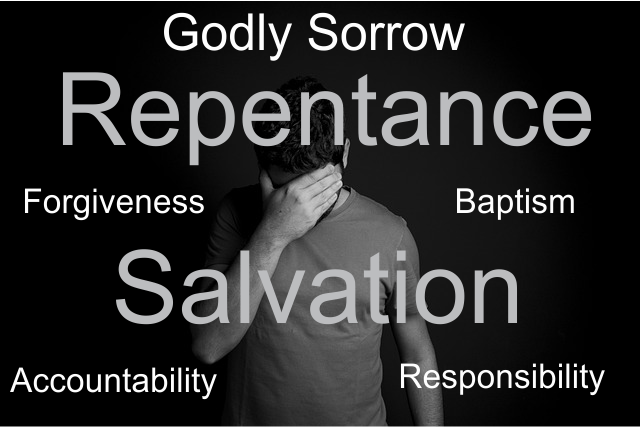
During our study, this criminal came to believe in Christ, experienced godly sorrow, and wanted to begin making things right, so he reached into his pocket and handed me the jewelry he had taken. By doing so, he began taking responsibility for his actions and attempted to make things right. He informed me he wanted to be baptized. After hearing the word of God, he repented, confessed Jesus as the Son of God, and we took him to the pool and baptized him for the forgiveness of his sins, immersing him in water in accordance with Scripture.

After baptism, he understood that his decision did not absolve him of the consequences of his actions. His heart had changed; he now wanted to take responsibility and accept accountability, and I applauded his decision. We then called law enforcement.

Because of his sorrow and request that I forgive him; I did so and chose not to press charges. His decision to make things right was admirable, but it would be costly for him, since he had also broken into other homes and entered our country illegally. He knew, in his heart, that he needed also to correct these wrongdoings.

At least now, when he is deported to his country, he takes with him a greater purpose: to spread what he has learned about the message of Christ with others. Maybe he will return to America legally someday. I gave him my study Bible and contact information. I look forward to hearing from him about his efforts to share Christ.

While this story is fictitious, it’s also possible.

Following Christ does not negate accepting responsibility and accountability for one’s actions; it enhances it. If we genuinely love Jesus and righteousness, we will want to do what’s right, even if it means exchanging our loss of earthly freedom for eternal life in heaven. (Matthew 16:24-26, John 14:15, Romans 6:1-14, Mark 16:15, Philemon 1)

Scripture’s definition of Godly Sorrow: (2 Corinthians 7:9-13)

God’s Grace: Ephesians 2:8, Romans 3:24, Titus 2:11, Acts 15:11

Hearing the Gospel:– Romans 10:17, John 8:32

Belief/Faith: – Hebrews 11:1, John 8:24, Romans 10:17, Acts 3:19

Repentance of sin: – 2 Cor. 7:9-10, Luke 13:3-5, Acts 17:30

Confess Christ: – Romans 10:9-10, Matthew 10:32-33, Luke 12:8-9

Baptism by immersion for forgiveness of sin: – Matthew 16:15-16, 1 Peter 3:21, Acts 2:38, Mark 16:16, John 3:5, Matthew 28:18-20, Ephesians 4:5, Romans 6:3-4, Colossians 2:12, Acts 8:36-39, Mark 1:9-10, John 3:23

God First!

Let God’s Word Speak –

Today God has approximately 7.5 billion souls on this earth, and Jesus died for each and every one of us. Scripture tells us how to respond to God’s Love and Grace

“For God so loved the world, that he gave his only Son, that whoever believes in him should not perish but have eternal life.” (John 3:16)

“And Peter said to them, “Repent and be baptized every one of you in the name of Jesus Christ for the forgiveness of your sins, and you will receive the gift of the Holy Spirit. For the promise is for you and your children and for all who are far off, everyone whom the Lord our God calls to himself. “‭‭

“because they formerly did not obey, when God’s patience waited in the days of Noah, while the ark was being prepared, in which a few, that is, eight persons, were brought safely through water. ‬‬“Baptism, which corresponds to this, now saves you, not as a removal of dirt from the body but as an appeal to God for a good conscience, through the resurrection of Jesus Christ,”‭‭

(1 Peter‬ ‭3:20-21‬ ‭ESV)‬‬

What shall we say then? Are we to continue in sin that grace may abound? 2 By no means! How can we who died to sin still live in it? 3 Do you not know that all of us who have been baptized into Christ Jesus were baptized into his death? 4 We were buried therefore with him by baptism into death, in order that, just as Christ was raised from the dead by the glory of the Father, we too might walk in newness of life. 5 For if we have been united with him in a death like his, we shall certainly be united with him in a resurrection like his. 6 We know that our old self was crucified with him in order that the body of sin might be brought to nothing, so that we would no longer be enslaved to sin. 7 For one who has died has been set free from sin. 8 Now if we have died with Christ, we believe that we will also live with him. 9 We know that Christ, being raised from the dead, will never die again; death no longer has dominion over him. 10 For the death he died he died to sin, once for all, but the life he lives he lives to God. 11 So you also must consider yourselves dead to sin and alive to God in Christ Jesus.”

(Romans 6:1-11)

  • Grace: – Ephesians 2:8, Romans 3:24, Titus 2:11, Acts 15:11
  • Belief/Faith: – Hebrews 11:1, John 8:24, Romans 10:17, Acts 3:19
  • Repentance: – 2 Cor. 7:9-10, Luke 13:3-5, Acts 17:30
  • Confess: – Romans 10:9-10, Matthew 10:32-33, Luke 12:8-9
  • Baptism by immersion for forgivness of sin: – Matthew 16:15-16 1 Peter 3:21, Acts 2:38, Mark 16:16, John 3:5, Matt 28:18-20, Ephesians 4:5, Romans 6:3-4, Colossians 2:12, Acts 8:36-39, Mark 1:9-10, John 3:23

© 2026 Advocate for Christ

Theme by Anders Noren — Up ↑